



If you issue invoices in Romania, e-invoicing in Romania is no longer a “getting ready” topic. It’s a day-to-day operational requirement.
The Romania ANAF mandate relies on RO e-Factura, the national platform operated by ANAF. For most in-scope flows, invoices need to be submitted through RO e-Factura and come back with validation evidence.
In this article, we’ll cover what the Romania e-invoicing system requires today, what changed most recently, and how ecosio can simplify connectivity with a self-service connector.
Looking to stay up-to-date with Romanian regulations?
Our e-invoicing in Romania country page is constantly updated to reflect the latest requirements
TL;DR
- RO e-Factura sits at the centre of the Romania e-invoicing system
- Deadlines depend on scope: B2B and B2G are clearance-style (submission as part of issuance) with near-real-time delivery to RO e-Factura, while B2C is reported within five working days
- Clearance-style validation changes how AP and AR teams work
- A self-service connector can reduce setup effort and token headaches
What RO e-Factura changes for your invoicing workflow
Romania’s approach is straightforward in theory. In practice, it introduces a new checkpoint in your process.
For domestic B2B and B2G transactions, invoice data is submitted to RO e-Factura, then ANAF validates it. The validation step is the difference between “we created an invoice” and “the invoice is legally issued” for clearance-style flows.
This is why ANAF requirements Romania are not only about format. They’re about predictability. You need to know what was sent, when it was sent, what ANAF replied, and what your next step is if something is rejected.
Why Romania is different
Romania’s clearance model creates a few operational realities that can catch teams off guard.
First, clearance and validation are mandatory for B2B and B2G. For these scenarios, an invoice is not legally valid until ANAF validates it.
For B2C, invoices can be exchanged with the consumer first and then reported to RO e-Factura within the relevant deadline (five working days).
Second, structured formats are required. Romania follows EN 16931 and accepts UBL 2.1 or CII, with national rules defined in RO_CIUS.
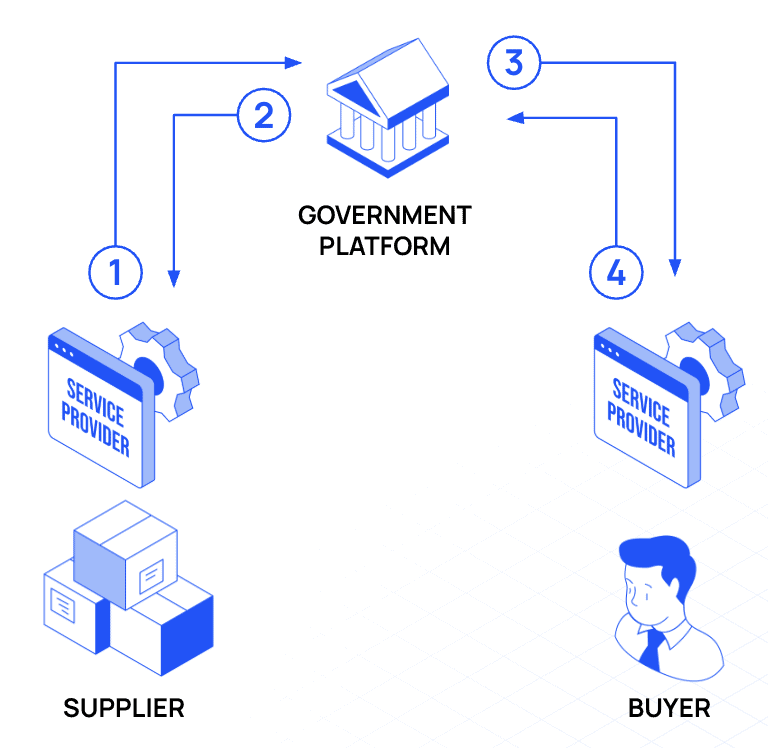
Third, there is no direct exchange between trading partners for in-scope B2B and B2G scenarios. Invoices flow through RO e-Factura, and the validated XML acts as the invoice of record.
Finally, adjacent obligations can add complexity, including SAF-T (D406) reporting and the Romania e-transport mandate for high fiscal risk goods.
Which transactions are in scope (B2B, B2G, and B2C)?
The Romania e-invoicing system now covers a wide share of domestic invoicing.
Timeline of Romania’s e-invoicing key dates:
- 11 November 2021: RO e-Factura launched for B2G e-invoicing and voluntary B2B e-invoicing
- 1 July 2022: B2G and high-risk B2B (e.g. fruit, alcohol, construction goods) mandatory
- 1 January 2024 to 30 June 2024: B2B reporting phase (submission within five working days)
- 1 July 2024: B2B clearance (submission and validation as part of issuance)
- 1 January 2025: B2C e-reporting and invoicing mandatory for Romanian-established taxpayers (with exceptions until mid-2025)
- 1 July 2025: Remaining exceptions (e.g. associations, small farmers) become subject to the B2C obligation if still exempt
For most organisations, the biggest impact is B2B e-invoicing Romania. Domestic B2B invoices must follow the RO e-Factura route, which means AR needs to handle government validation and AP needs to work with what comes back.
B2G has been in place longer. If you invoice public institutions, you are already familiar with the basic model.
B2C obligations arrived later and come with practical details around how individuals are handled in the system. If your business issues invoices to consumers, it’s worth confirming when B2C applies in your scenario and how identification is expected to be represented.
Recent update: deadlines and terminology
Romania has clarified and standardised transmission deadlines across relevant scenarios.
For B2C transactions, invoices must be reported within five working days from issuance. There is also a cap tied to the statutory deadline for issuing the invoice under the Fiscal Code.
For B2B, the five working day reporting phase applied between January and June 2024. Since July 2024, Romania has operated as a centralised exchange clearance model, which means submission is treated as part of issuance.
The same update clarified additional obligations, including scenarios involving taxable persons that are VAT-registered in Romania but not established there, and it provided further B2C clarifications.
If your internal guidance still says “five calendar days”, it’s time to update it.
How to connect to ANAF without turning it into an IT project
Most teams don’t struggle because they cannot generate an XML file. They struggle because credentials, tokens, and portal steps create friction.
ecosio supports RO e-Factura connectivity with a guided self-service setup flow in ecosio Monitor. This is designed to make the connection process more controlled and less error-prone, especially when you need to renew credentials.
How ecosio helps
With ecosio’s Global E-invoicing Compliance, you connect once and can manage Romania end to end.
You can transform ERP invoice data into UBL 2.1 or CII that complies with RO_CIUS requirements. You can submit invoices to RO e-Factura, retrieve ANAF validation results, and support both outbound and inbound flows so AP teams can retrieve validated supplier invoices where applicable.
When an invoice is rejected, you get clear feedback to support correction and resubmission. You can also store audit evidence, including ANAF validation status and platform identifiers (e.g. upload and download IDs), and track outcomes in ecosio Monitor so finance teams can see what is happening without chasing IT.
How the self-service connector works
You set up the connector in ecosio Monitor, register the callback URL in ANAF SPV, then generate and submit your client credentials so you can receive access tokens using your qualified certificate.
Once connected, you can test end to end by sending a test e-invoice and confirming the ANAF response.
What you need before you start
- A qualified digital certificate from a trusted Romanian provider
- Access to ANAF SPV (Virtual Private Space)
- The right permissions to use connectors in the ecosio Monitor
What a typical flow looks like
- Your ERP system generates invoice data
- ecosio validates and transforms it
- ecosio submits it to RO e-Factura
- ANAF validates or rejects it, and only then is the invoice considered legally issued
- ecosio retrieves the status, stores the identifiers, and returns a clear outcome in ecosio Monitor
Romania e-transport mandate: don’t ignore the neighbour requirement
The Romania e-transport mandate is not the same as RO e-Factura, but it often becomes relevant for the same businesses.
If you move high fiscal risk goods, you may have additional reporting obligations. It’s worth checking early because it can affect processes outside invoicing, including logistics and transport documentation.
A quick readiness check
If you only have a minute, these are the gaps that usually cause trouble:
- You cannot reliably transmit invoices within the five working day deadline
- You do not have a clear process for rejections and resubmissions
- Finance teams cannot see invoice status without asking IT
- Token renewal is treated as an emergency instead of planned maintenance
Want more information?
If you’re looking for a way to connect to ANAF and manage RO e-Factura obligations with less operational overhead, get in touch today. Our e-invoicing experts would be more than happy to discuss your situation and talk through how you could futureproof your solution.