



VAT fraud costs governments billions every year, making tax compliance a top priority worldwide. But how exactly does the shift to digital invoicing help to close the tax gap?
In this video, Gunjan Tripathi, EMEA Director of VAT & Tax Technology at Vertex, explains why e-invoicing is an essential tool for fraud detection and audit readiness, and how businesses can use this transition to unlock significant operational benefits.
Watch the video or read the transcript below.
Why is e-invoicing now seen as a key tool in fighting VAT fraud?
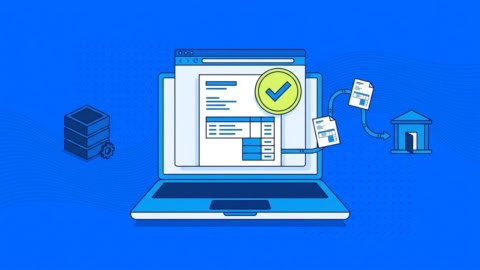
E-invoicing has become central to fighting VAT fraud as it brings transparency into transactions that used to be hard to track. Governments lose billions every year to VAT fraud, and this is largely due to delayed or incomplete reporting. With e-invoicing, data is captured in a structured digital format and can be shared with authorities much faster. This means fewer blind spots. Plus, this approach also standardises how invoices are created and reported, which makes it much harder to manipulate data. So instead of reacting months later, authorities can monitor transactions almost in real-time and spot suspicious patterns earlier.
Does e-invoicing stop fraud, or just make it easier to spot?
It is more about detection than prevention, at least directly. E-invoicing doesn’t automatically stop someone from trying to commit fraud. What it does is make fraudulent behaviour much harder to execute. Because invoices are digital, structured, and often reported in real-time, inconsistencies become visible very quickly. Authorities can spot anomalies early, so it reduces the window of opportunity for tax evasion. So while it doesn’t eliminate fraud entirely, it significantly limits its scale and duration, which is ultimately what governments are aiming for.
What types of VAT fraud can e-invoicing help detect?
The most well-known example is carousel fraud, which is also known as missing trader fraud. This is where companies exploit cross-border VAT rules to claim VAT refunds they’re not entitled to. E-invoicing helps by creating a clear, traceable record of transactions between parties. It also helps detect underreporting of sales or inflated input VAT claims, which are common fraud tactics.
Since all invoice data is structured and easier to analyse, authorities can connect the dots across multiple transactions and identify suspicious patterns much faster than they would have been able to do previously.
Can e-invoicing improve VAT audit readiness?
Absolutely. E-invoicing can definitely improve VAT audit readiness as it creates a consistent digital audit trail for every transaction. Because the data is structured and validated upfront, there are fewer errors and discrepancies to deal with later. With this approach, when an audit happens, businesses can provide accurate, complete data quickly. It also reduces the need for manual reconciliation between systems. In practice, this leads to faster audits, fewer disputes and lower compliance risk. It essentially shifts effort from fixing issues after the fact to getting things right from the start.
How else does e-invoicing benefit businesses?
Beyond compliance, e-invoicing brings many operational benefits. It reduces manual workload, lowers error rates, and speeds up invoicing processes and payment cycles.In turn, this improves cash flow and frees up teams to focus on more strategic tasks. E-invoicing also helps businesses to scale as automated processes can handle higher volumes without adding complexity. On top of that, having accurate real-time data improves decision-making across finance and operations. So while regulation is a key driver, many companies adopt e-invoicing because it simply makes their business run more efficiently.