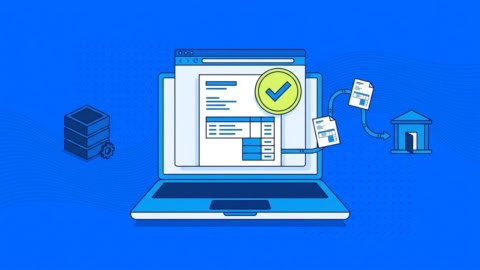




The EU’s VAT in the Digital Age (ViDA) initiative is set to transform how businesses handle cross-border transactions. With the shift towards continuous digital reporting, ensuring your systems are “ViDA-ready” is essential for businesses’ compliance and smooth supply chain operations.
But what does system readiness actually look like, and how can you avoid common integration pitfalls?
In this video, Gunjan Tripathi, EMEA Director of VAT & Tax Technology at Vertex, breaks down exactly how ViDA will impact your ERP, why data quality is critical, and the steps you need to take right now to prepare your business.
Watch the video or read the transcript below.
What does being “ViDA-ready” actually involve?
Being ViDA-ready is about ensuring your systems can handle continuous digital reporting without missing a beat.
At its core, this means being able to extract data from an ERP, validate it against the strict EU standards, and transmit it securely in the required format. Because ViDA is introducing near real-time reporting, having good data quality is also important. Any error at the source will be reported almost instantly. So your internal workflows must be able to handle validation before the data ever leaves the system.
Another thing your system needs to have to be ready for ViDA is flexibility. Since regulations are still evolving, your setup must be able to adapt to new requirements without needing a total redesign.
Will ViDA require real-time data exchange between systems?
As one of the central pillars of ViDA is digital reporting requirements, it is safe to say that ViDA will definitely require real-time data exchange between systems.
ViDA’s goal here is to close the VAT gap, which is the gap between expected and collected VAT revenue by removing the delays associated with traditional periodic filings.
Moving forward, for cross-border transactions within the EU, data must be exchanged and reported to tax authorities shortly after the invoice is issued.This will mean big change is required for businesses whose setups rely on batch processing.
How will ViDA affect ERP and finance systems?
ViDA will be a significant catalyst for ERP and finance system updates. To cope with ViDA’s requirements, these systems will need to be able to produce structured invoice data, support additional reporting requirements, and maintain a high level of accuracy.
For those businesses whose ERP set-ups weren’t designed for continuous reporting, this will be a real issue. The two main options available to those in this position are to extend your ERP or connect it to an external provider to handle compliance.
Which one you choose depends on your resources and expertise and how much internal effort you’re willing to expend.
Moving forward, upstream processes like procurement and sales order entries will need to be more disciplined because ViDA moves the point of tax compliance upstream for a transaction.
This shift in real-time reporting means data has to be spot on from the get-go as the old window for fixing mistakes at the end of the month is essentially closing.
If there’s a slip-up with master data, like an incorrect VAT ID or tax code, this will trigger an immediate rejection from the tax authorities. Because of this, these early workflows need to shift towards automated validation to catch errors before an invoice is even created. By tightening these things up at the source, businesses can avoid the headaches associated with rejected documents and keep the whole supply chain moving smoothly.
What are the most common mistakes businesses make when preparing systems for ViDA?
I would say there are three big mistakes that a lot of businesses make when preparing for ViDA. The first is lack of internal alignment. ViDA impacts everything from IT to procurement, so failing to set clear ownership across departments will inevitably lead to a fragmented and messy strategy.
The second is not prioritising data quality. Many businesses still rely on manual fixes. But since reporting is increasingly near real-time, even small errors will trigger immediate rejections. Automation only works if the data is spot on from the get-go.
The third common mistake is using misaligned platforms that don’t talk to each other. These integration gaps quickly become major bottlenecks as deadlines loom and make it impossible to scale as transaction volumes grow.
Who should be involved in preparing systems for ViDA?
Preparing for ViDA definitely isn’t a job for a single department. It requires a cross-functional team to ensure every part of the business stays compliant.
First, IT and EDI specialists are needed to handle the technical heavy lifting, like system integration and ensuring the ERP can speak the right digital language. Finance and tax teams then need to step in to define the reporting rules and make sure every transaction is accurate and complete.
Finally, procurement and sales need to be involved because data quality starts with them. They manage the master data like supplier VAT IDs, which has to be spot on to avoid rejections.
Bringing these groups together early is the only way to avoid a fragmented approach and ensure the whole system is ready for real-time reporting.
What are the most important steps businesses should take to prepare for ViDA?
A good starting point is to look at your own system landscape and identify where the gaps are. From there, take a close look at your data quality and fix issues before they become a bigger problem.
You also need to think about how data actually flows from your systems between your systems, especially with faster reporting requirements coming in. It’s a good idea to clearly define roles and responsibilities across your teams to make sure nothing falls through the cracks.
And then it’s about testing. Start early, test properly, and roll things out step by step.That way, you reduce risk and avoid surprises later on.