



🔍 TL;DR summary
- CTCs require invoice data to be shared with tax authorities in real time, shifting compliance from post-audit to live validation
- More countries are adopting CTCs, including for B2C, making technical readiness essential for businesses operating internationally
- Common challenges include system integration, workflow changes, and data security, often requiring cross-department alignment
- CTCs can improve efficiency and audit readiness, especially when supported by scalable solutions and expert guidance
As tax authorities begin to embrace digital tools, the way businesses meet their tax obligations is undergoing a fundamental shift. At the centre of this change is the rise of continuous transaction controls (CTCs).
In this article, we break down what CTCs are, the challenges and benefits they present, and what businesses can do to stay ahead of the curve.
What are CTCs?
Continuous transaction controls (CTCs) are real-time or near-real-time government-imposed mechanisms designed to monitor and regulate business transactions, particularly for VAT compliance. Unlike traditional post-audit models where invoices are reviewed after being issued, CTCs require transactional data, such as e-invoices, to be submitted to or cleared by tax authorities before or during the exchange between buyer and seller.
Why are CTCs growing in popularity?
CTCs are growing in popularity because they allow governments to combat VAT fraud and boost revenue by gaining real-time visibility into business transactions. Traditional tax reporting methods often leave long gaps between invoice issuance and audit, making fraud easier to commit and harder to detect. With continuous transaction controls, tax authorities can validate, approve, or receive transactional data almost instantly, tightening compliance and reducing errors. As digital infrastructure improves and tax gaps remain a priority across regions, more countries are adopting CTC models to modernise their tax systems and ensure better control over domestic and cross-border trade.
How do CTCs work?
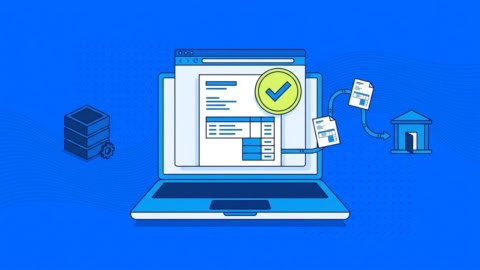
Continuous transaction controls (CTCs) change how invoices are processed by requiring businesses to share invoice data with tax authorities in real time, often before sending the invoice to the customer. This contrasts with traditional invoicing, where reporting happens later and in bulk.
Here’s how the CTC process typically works from a technical perspective:
- Invoice creation: A structured e-invoice (in a machine-readable format such as XML or UBL) is generated within the business’s ERP or invoicing system
- Data transmission: The invoice data is sent electronically (often via an API) to a government portal or central tax platform
- Validation by authorities: The tax authority automatically checks the invoice for required fields, accuracy, and compliance with local tax rules
- Clearance or acknowledgment: If the invoice passes validation, the authority either clears it for dispatch or provides a confirmation receipt
- Invoice delivery: The validated invoice is then sent to the buyer, often with an official code or reference attached
This automated process increases transparency and control for tax authorities, while requiring businesses to adopt compliant technical infrastructure.
Why companies can’t ignore CTCs
It’s the law!
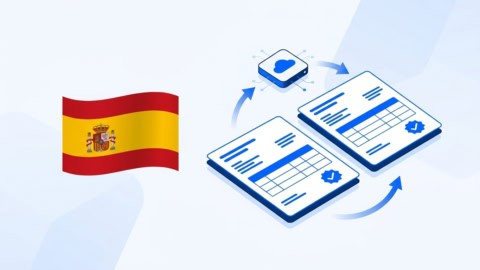
More and more countries are implementing CTCs on a mandatory basis. Italy, for example, has been using CTCs across the board since 2019. Meanwhile, France, Poland and Spain are following suit with a staggered introduction.
CTCs are expanding to include B2C transactions too
While the first mandatory CTCs focussed on B2B transactions, the B2C sector is increasingly taking centre stage. Countries such as Romania, Malaysia and Saudi Arabia already require the reporting of B2C transactions, and France will soon too.
Common CTC challenges
Adopting continuous transaction controls (CTCs) can require significant technical and organisational change, with businesses often facing the following hurdles:
- Technical integration: Connecting to government platforms typically involves API-based communication and generating structured e-invoices, which many legacy systems aren’t equipped for.
- Data protection and security: Sensitive invoice data must be transmitted externally, often in real time. Internal teams must ensure systems and processes comply with GDPR and local security laws, without exposing the business to data breaches or non-compliance.
- Process adjustments: In many CTC models, invoices must be validated by authorities before reaching the customer. This demands new workflows, timing, and automation.
- Employee training: Teams across finance, IT, and compliance must understand and implement the new requirements accurately to avoid errors or delays.
Successfully addressing these challenges often involves cross-department collaboration and, in many cases, external support or specialised tools.
How can CTCs benefit companies?
While CTCs are typically seen as a headache by companies due to the effort involved in preparing for them, they do benefit businesses in several ways, including…
- Efficiency gains through expansion of automated processes
- Reduced manual effort relating to tax reporting
- Improved transparency for accounting and auditing
- Fewer queries from authorities
- Faster tax processing
How should you prepare for CTCs?
Being able to comply with CTCs requires strategic preparation – not only technically, but also organisationally. To ensure your business is ready, be sure to follow these steps and ask yourself the accompanying questions:
1. Analyse the status quo
Start by mapping your current invoicing processes and tools to understand your baseline. This helps reveal what already works and what needs updating.
Questions to ask include:
- Which systems are in use (ERP, accounting, archiving)?
- Are invoicing workflows already digital or partly automated?
- Do your current tools support e-invoicing formats?
- What level of integration already exists between systems?
2. Identify technical and personnel gaps
Once your baseline is clear, assess where capability gaps exist, both technical and human.
Questions to ask include:
- Can your system create structured invoices (e.g. XRechnung, ZUGFeRD)?
- Do you support required formats and transmission protocols?
- Does your team have sufficient understanding of API integrations and validation flows?
- Would it be beneficial for representatives from IT, finance, or purchasing to have more involvement moving forward?
3. Consider future requirements
Preparing for CTCs means looking beyond immediate needs. Future mandates may vary by country, customer type, and industry, so maintaining flexibility is key.
Questions to ask include:
- Are CTCs likely to affect any countries in which you operate in the near future?
- What mandatory data is required for compliance?
- How can you prepare this data in your ERP system?
- Which transactions are affected (B2B, B2G, B2C)?
- Do certain customers or industries have extra requirements?
4. Decide whether you want to build or buy
If you have limited internal resources or expect your needs to change in the future, an external solution provider can make life a lot easier.
Questions to ask include:
- Do you have the capacity and expertise to handle CTC compliance in-house?
- Have you fully investigated what external CTC-ready solutions and integrations are available?
- Will your chosen solution scale across markets and evolving rules?
Still have questions?
If you want to know more about continuous transaction controls and what you need to do to achieve compliance with various country-specific regulations, get in touch! Our e-invoicing experts will be more than happy to advise you.