



Meeting German e-invoicing requirements doesn’t have to be complicated.
With the German e-invoice mandate coming into effect, businesses must transition to structured formats. Our tools help you navigate these new German e-invoicing requirements by providing instant, automated validation.
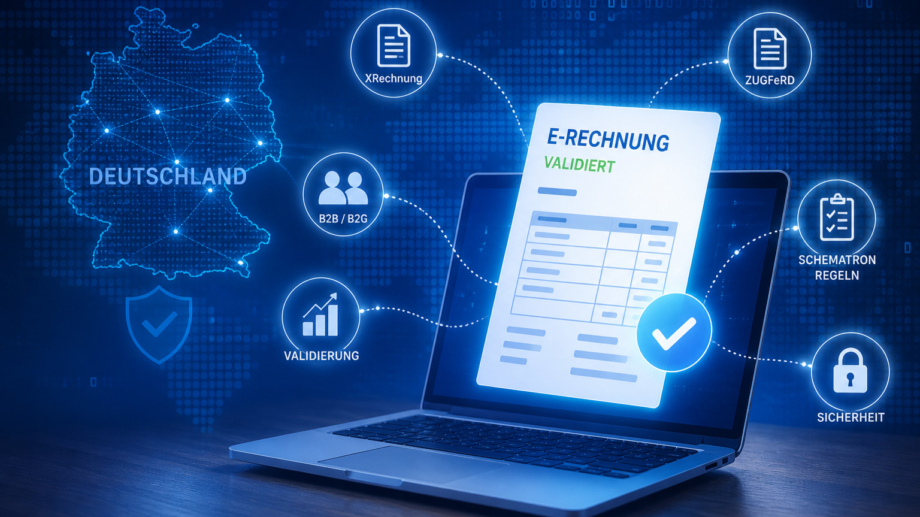
To remain compliant, companies must ensure their documents adhere to specific technical standards. Formats such as XRechnung, UBL, or ZUGFeRD are updated regularly, and even a small change can mean that an invoice is suddenly rejected.
Anyone who wants to validate an e-invoice for Germany needs to check whether it complies with the very latest validation rules.
TL;DR summary
- Rules for e-invoices in Germany change regularly, especially for XRechnung and ZUGFeRD
- An e-invoice can look technically correct but still fail current validation checks
- A quick validation before sending helps avoid rejections, clarification requests and delays
- ecosio provides four free validators that allow you to check an e-invoice against current requirements
Why e-invoice validation in Germany can quickly become complicated
German e-invoice standards and validation rules change regularly, particularly for XRechnung and ZUGFeRD (including profiles, Schematron checks and mandatory fields).
As a result, a file that passed yesterday may be rejected tomorrow. What’s worse, errors are often not visible. It only takes the smallest detail to break validation. Rejections then take time to resolve, causing frustration and delays.
Ultimately, only one question matters:
Is the invoice valid for Germany right now?
The pragmatic approach: validate briefly before sending
Anyone who has seen a cryptic error message in a portal knows how frustrating it can be.
The shortcut is usually straightforward:
- Take the file
- Check it against the latest rules
- Work through the error list
- Only then send it through your invoicing workflow
This prevents small rule changes from turning into rejections, clarification requests or audit issues later.
Validate German e-invoices for free – without manually maintaining updates
At ecosio, we work with the technical details of German e-invoicing every day and know the challenges first hand. That’s why we’ve made the validators we use internally available to the community free of charge.
Our free e-invoice validation tools
- UBL Invoice validator: https://ecosio.com/validate/germany-ubl-invoice-latest
- UBL Credit Note validator: https://ecosio.com/validate/germany-ubl-credit-note-latest
- CII validator: https://ecosio.com/validate/germany-cii-latest
- ZUGFeRD validator: https://ecosio.com/validate/germany-zugferd-latest
How to meet German e-invoicing requirements
To use your new e-invoice validation assistant, simply follow these four steps
- Select the tool that matches the format of your chosen file
- Upload the file
- View the validation results
- Save the appropriate validator(s) to your bookmarks bar so you can access easily in future
- Relax
We keep the validation logic up to date in the background, so there’s no need for you to keep track of German regulations moving forward.
Top tip: Take an invoice that was recently rejected (or only just accepted) and run it through the validator. You should immediately see which rule is causing the issue.
When is validation particularly useful?
In short: whenever something changes, or when you prefer not to learn about a new requirement from the recipient’s portal.
Validation is especially useful:
- Before the go-live of a new ERP, mapping or e-invoicing workflow
- When you see recurring rejections or unclear error messages
- After changes to mappings, formats, mandatory fields or master data logic
- After updates to XRechnung or ZUGFeRD rules
Have a question?
If you have any questions about our validators or are interested in integrating them into your local system, please to contact us at:
E-invoice validation in Germany: FAQ
How can I validate an e-invoice for Germany?
To validate an e-invoice for Germany, you must check whether the invoice complies with the XRechnung standard or the German requirements within formats such as ZUGFeRD.
This is typically done using an e-invoicing validator such as those provided by ecosio. After uploading the invoice file to such a validator, the tool will check whether or not the invoice complies with the current German validation rules, including the required structure and business rules.
What is e-invoice validation?
Validation is where an electronic invoice is checked to see if it complies with the technical and structural rules of a specific format.
This includes checking:
- Whether all mandatory fields are present
- Whether values are structured correctly
- Whether the invoice meets the current Schematron validation rules
Only when an invoice passes these checks is it considered technically valid.
Why is an e-invoice sometimes rejected even though it worked before?
This happens because validation rules change. Formats such as XRechnung or ZUGFeRD are updated regularly. As a result, a file that was accepted yesterday may fail today.
This is why it is worth validating invoices against the latest rules before sending them.
Which formats can I check with the ecosio validators?
ecosio’s free e-invoice validation tools support the following common e-invoice formats used in Germany:
- UBL Invoice
- UBL Credit Note
- CII
- ZUGFeRD
These formats cover the main standards used in both B2B and B2G invoicing in Germany.
Are ecosio’s e-invoice validation tools always up to date?
Yes. If standards or validation rules change, ecosio’s validation tool is updated automatically, meaning you can just bookmark the link and relax!
Are ecosio’s German e-invoice validators free to use?
Yes. Our validators can be used free of charge to check individual invoices and analyse validation errors.